What Math Should a Child Know by Grade? Use a Skills Review Checklist
Use a grade comparison as a starting point for choosing practice: ask the child to solve a short problem, explain a model and check the answer. The K–6 table below selects topics from the Common Core introductions; it is not a full curriculum, an entry requirement or a diagnosis. Check your school’s current sequence before setting expectations.
If you are asking what math a kindergartner, first, second, third, fourth, fifth or sixth grader should know, start with the corresponding row and then look at the neighboring rows for prerequisites. These are selected examples of learning topics, not a statement that every child follows one timetable.
Record evidence in three simple columns
For each selected skill, write “shown independently,” “shown with a prompt,” or “review next,” alongside the date and the child’s explanation. Try a second problem before deciding the first response represents a stable skill. The gated companion covers fractions only, rather than every grade in this table.
Follow up on the explanation
For 8 + 5, a child might make ten with two from five, then add three to get thirteen. For 1/2 + 1/3, use sixths to combine three sixths and two sixths. A correct number without an explanation is a reason to ask another question, not assign a diagnostic label.
Choose a manageable next lesson
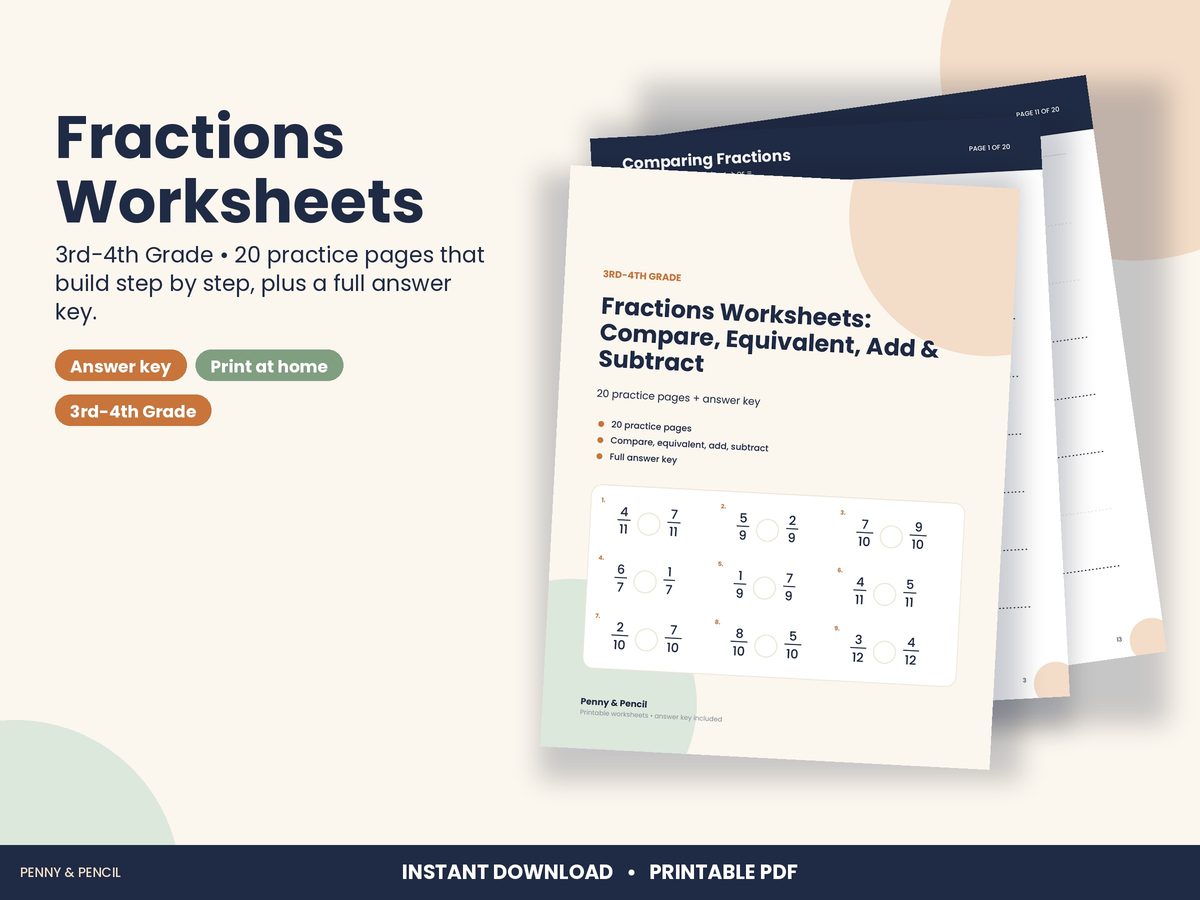
Pick one skill that the evidence suggests needs practice and retain a dated example for the next review. If the school’s sequence differs, use its guidance. The reference includes grade-six topics even though the offered fractions pack is described for grades three and four; it is not a complete K–6 course.
Selected Common Core review topics; original checks
Worked numbers, tables and teaching examples are original illustrations, not customer records.
The free download opens when you join our list: join below.
Free downloads unlock when you join our list
Join the Penny & Pencil list once, confirm the email we send, and every free download, printable and planner on this site opens. We send a welcome note, deals, and one email every two weeks. Unsubscribe any time.
You are in. Your free downloads are unlocked on this page.