How to Keep a Fuel Log: Fill-Ups, Distance and Missing Records
Keep a fuel log with a dated row for every purchase, the odometer reading, fuel quantity and unit, amount paid, full-or-partial tank status and receipt reference. Preserve partial fills and missing-record flags instead of inventing fuel use. A purchase ledger can remain useful even when an interval cannot support an MPG calculation.
Use one vehicle code and consistent distance and fuel units. The fictional ledger below records miles and US gallons. The 6-gallon partial purchase is still a real row; it is not a full-tank endpoint.
Keep partial tanks within the ledger
From the first full tank at 10,000 miles to the next at 10,300, retain the intervening 6 gallons plus the final 4 gallons. With complete records that is 300 miles and 10 gallons. FuelEconomy.gov’s odometer method starts and ends at a full tank; this guide focuses on retaining all purchase records.
Flag gaps without guessing
If a fill-up receipt is missing, mark the affected interval incomplete. Keep its known date and odometer if verified, but leave unknown gallons unknown. Restart a clean comparison at a documented full fill rather than reporting a precise rate from incomplete purchases.
Keep the printable and spreadsheet roles clear
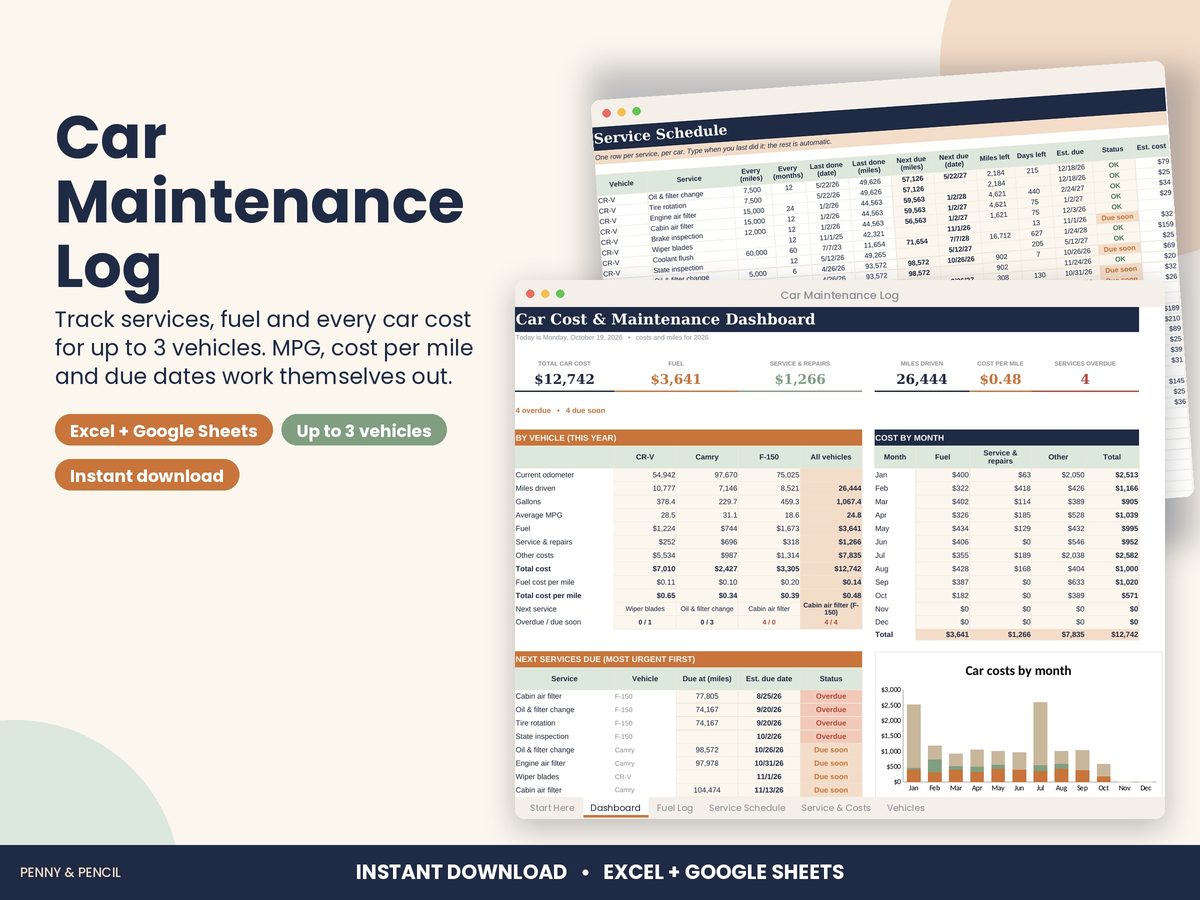
A mileage log printable can hold dated readings and receipt references. The paid Car Maintenance Log is the catalog’s Excel and Google Sheets file, not a fuel-specific PDF or an automatic bank feed. For a single complete interval calculation, read the worked MPG guide.
Worked numbers, tables and teaching examples are original illustrations, not customer records.
The free download opens when you join our list: join below.
Free downloads unlock when you join our list
Join the Penny & Pencil list once, confirm the email we send, and every free download, printable and planner on this site opens. We send a welcome note, deals, and one email every two weeks. Unsubscribe any time.
You are in. Your free downloads are unlocked on this page.