How to Make an Event Budget: Fixed Costs, Guest Costs and a Final Reconciliation
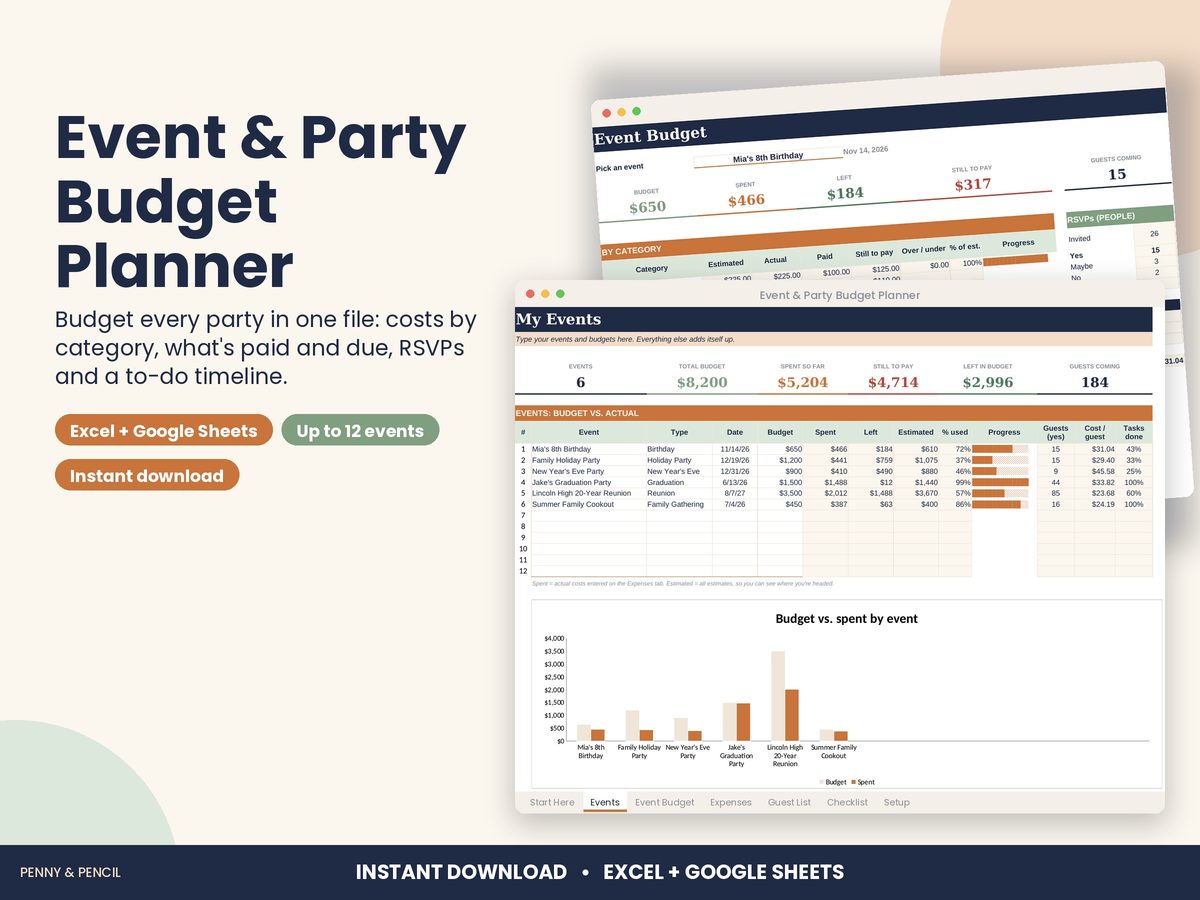
Make an event budget by separating fixed costs from per-guest costs, recording deposits against the same supplier total and reconciling the final receipts. In this fictional party budget template, 200 dollars of fixed costs plus 20 guests at 12 each makes a 440 plan; actual receipts total 446.
Write the event date, expected guest count, supplier and quoted total. The example uses a 150 room fee, 50 supplies and 240 food cost. These are invented figures, not suggested prices. Keep a quote reference beside each amount so changes can be traced.
Treat the deposit as part of the total
A 60 room deposit leaves 90 still to pay on the 150 room booking. Do not add 60 to the room cost again. Track quoted cost, paid to date and remaining balance in separate fields; a booking confirmation and a payment receipt prove different things.
Update guest costs without rewriting fixed costs
The fictional final attendance is 18 guests and food is billed at 12 each, making 216. Supplies finish at 80; the room remains 150. Actual cost is therefore 150 + 216 + 80 = 446, which is 6 above the original plan. Retain the original 20-person assumption.
Close from receipts rather than estimates
The room receipts show 60 plus 90, food shows 216 and supplies show 80. Paid receipts sum to 446 with zero remaining on these checked items. Leave an unpaid or disputed line open with its next action. An event budget spreadsheet organizes these entered records; it does not confirm supplier terms.
Worked numbers, tables and teaching examples are original illustrations, not customer records.
The free download opens when you join our list: join below.
Free downloads unlock when you join our list
Join the Penny & Pencil list once, confirm the email we send, and every free download, printable and planner on this site opens. We send a welcome note, deals, and one email every two weeks. Unsubscribe any time.
You are in. Your free downloads are unlocked on this page.