Start with take-home income for the same period
The CFPB describes these proportions as a rule of thumb and invites people to choose a personal rule that fits their circumstances. Use the amount received after paycheck deductions, not the gross salary figure. This guide illustrates the arithmetic; it does not decide what a household can afford.
Fictional 3,000-dollar month: reference allocation| Category | Calculation | Amount (USD) |
|---|
| Needs | 3,000 × 0.50 | 1,500 |
|---|
| Wants | 3,000 × 0.30 | 900 |
|---|
| Savings and debt payments | 3,000 × 0.20 | 600 |
|---|
| Total | 50% + 30% + 20% | 3,000 |
|---|
Compare the reference amounts with actual entries
In this fictional monthly record, take-home income is 3,000 dollars but entered needs total 1,950. That is 1,950 ÷ 3,000 × 100 = 65%, which exceeds the reference 50%. Keep the actual figure visible; changing its category label would not remove the expense.
Write an adjusted plan without treating it as a rule
To demonstrate a different allocation, the fictional household records 1,950 for needs, 450 for wants and 600 for savings and debt payments. These are 65%, 15% and 20%, totaling 100%. They are a chosen example, not recommended proportions or evidence that obligations are covered.
List the actual bills, dates and chosen categories before accepting a plan. If entries total more than received income, show the gap separately. A percentage framework does not settle a payment obligation or make an unaffordable month work.
Count each allocation once
Write down how you classify debt payments in this version of the framework, and use the same convention throughout. A transfer to savings is an allocation of the same income, not new income. Do not count a credit-card purchase and its later payment as two purchases in a spending total.
Keep a monthly comparison
Record category, planned amount, actual amount, difference and notes. For example, actual wants of 480 against the chosen 450 plan gives 30 over plan. A later month can use different entered amounts; keep the prior record intact.
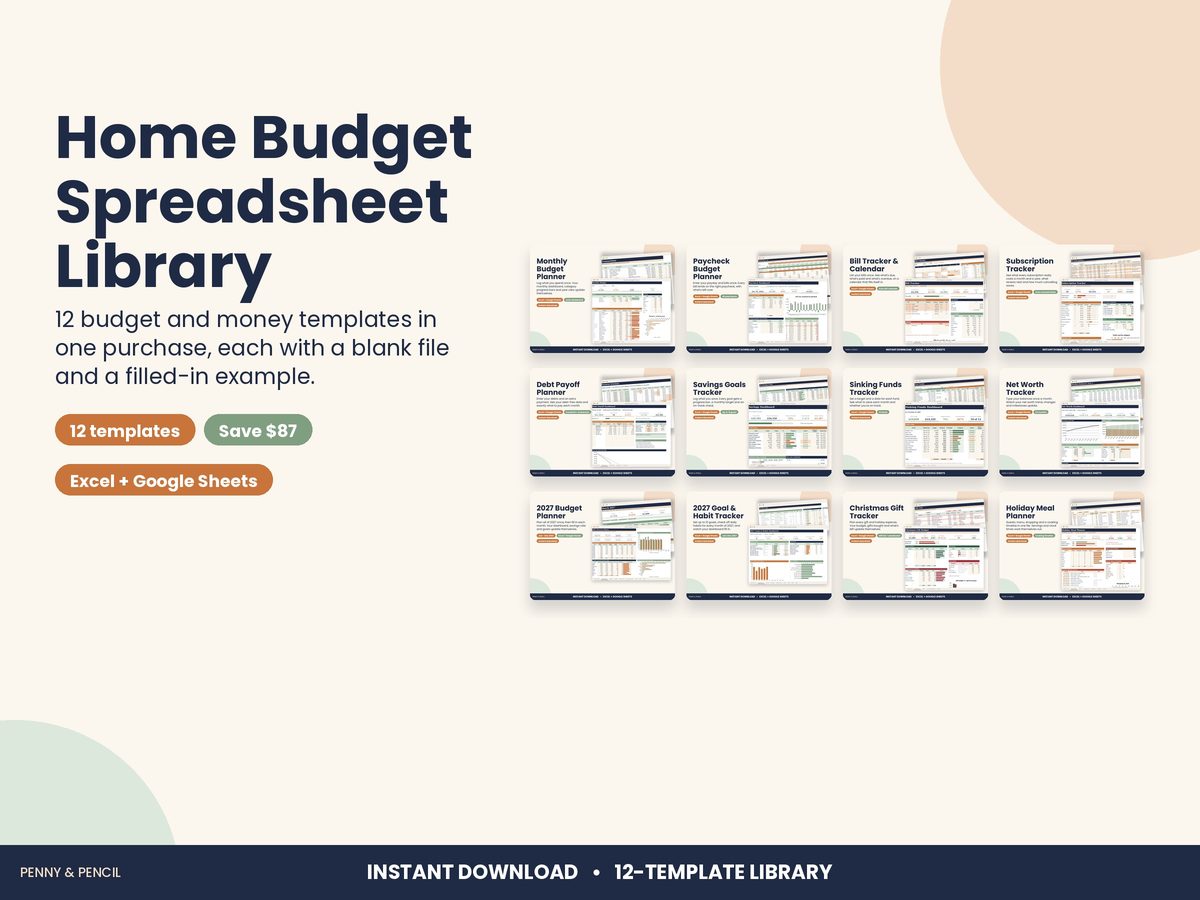
The Home Budget Spreadsheet Library is a paid collection of organizing spreadsheets. The gated budget PDF is a separate blank template, not a personalized allocation or an affordability assessment.
Not financial, tax or legal advice.
Related guides and practice
Browse printables by topic or learning worksheets by grade.
Sources — read November 21, 2026
Worked numbers, tables and teaching examples are original illustrations, not customer records.