How to Save Money on Groceries: Compare Your Own Meal and Receipt Totals
To look for ways to save money on groceries, compare the same length of time using your own meal plan and receipts. Separate food from household extras, count every top-up trip, and check whether the meals and pantry use changed. A lower receipt total is a finding to investigate, not a promised saving.
Choose a seven-day period and keep the receipts from every store visit, delivery and top-up shop.
Write down the meals you planned and what you actually prepared. Note guests, meals away and leftovers used.
Separate food items from household extras such as paper towels. Keep any delivery fee or other charge on its own line.
Use the amount actually paid after discounts. If a receipt total already includes a discount, do not subtract it again.
Add all receipt lines back to the paid total. Mark unclear items for checking instead of guessing a category.
Keep this method consistent in the next period. For a mixed receipt, label each item once so the food subtotal and extras reconcile with the checkout total.
Compare food totals, not just the biggest receipt
Original fictional example: both periods last seven days. These totals cover food and household extras only; there are no separate delivery fees or other charges.
Fictional receipts: two seven-day periods
Record
Week A
Week B
Main trip: food
$60
$58
Top-up trips: food
$14
$8
Food subtotal
$74
$66
Household extras
$6
$6
All receipts paid
$80
$72
The main trip fell by only 2, while top-up food fell by 6. Together they explain the 8 reduction in food spending. Extras were unchanged, so the all-receipt reduction is also 8. These are sample amounts, not typical grocery costs.
Check what changed before calling it a saving
In this example, Week B included two dinners away and used rice already in the pantry. The lower checkout total does not show the cost of replacing that rice or buying those meals elsewhere.
Were the same people eating roughly the same number of meals at home?
Did a bulk purchase leave ingredients for the next week, or did you use stock bought earlier?
Were portions, quantities and package sizes comparable?
Did a discount apply once, or could you actually use it again?
Were meals away recorded separately from grocery purchases?
Keep a short explanation beside the difference. Compare another period with similar meals before treating the result as a repeatable change.
Turn the meal plan into a receipt check
Before shopping, list the meals, ingredients needed and amounts already on hand. Buy quantities and ingredients used are different records: a whole package can last beyond one meal.
Worked meal example: four portions use ingredients costing 8 in total, based on the amounts used from each package. The ingredient cost is 8 ÷ 4 = 2 per portion. Buying the full packages might cost more at checkout; keep that purchase total separate.
After cooking, note how many portions you actually made and what remained. Use your own package quantities and receipt amounts for the next estimate; do not divide the entire weekly grocery bill by just the dinner portions.
Choose one change and review the next week
Pick a specific recordkeeping question, such as whether unplanned top-up trips explain the difference.
Plan the next menu around the ingredients you intend to use and note what is already available.
Record the same food, extras and other-charge categories for the next seven days.
Compare totals alongside portions, meals away and pantry changes.
Keep, adjust or discard the change based on your records; no reduction is guaranteed.
Use the blank plan or the spreadsheet
The email-list PDF above is the existing two-page meal planner and aisle-sorted shopping list. It is for handwriting meals and shopping items; it does not calculate receipt totals or include the paid workbook.
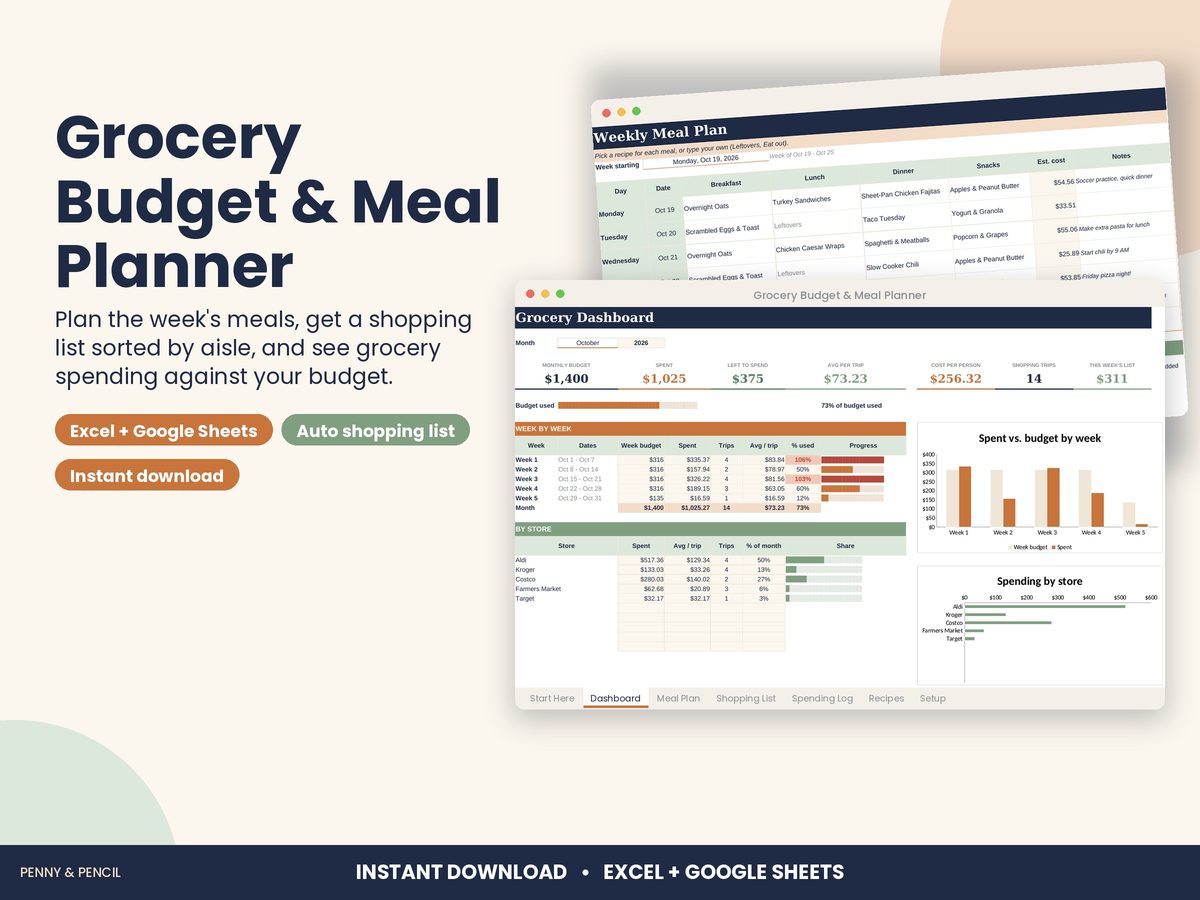
The Grocery Budget & Meal Planner for Excel and Google Sheets includes a weekly meal plan, recipe cards, an automatic shopping list and a spending log. You enter your own estimates and purchases; it does not connect to stores or bank accounts. The comparison here is a separate manual procedure, not a new spreadsheet feature.
All receipt amounts, meals and calculations are original fictional organizing examples. This is recordkeeping, not financial, tax or legal advice.
The free download opens when you join our list: join below.
Free downloads unlock when you join our list
Join the Penny & Pencil list once, confirm the email we send, and every free download, printable and planner on this site opens. We send a welcome note, deals, and one email every two weeks.
You are in. Your free downloads are unlocked on this page.