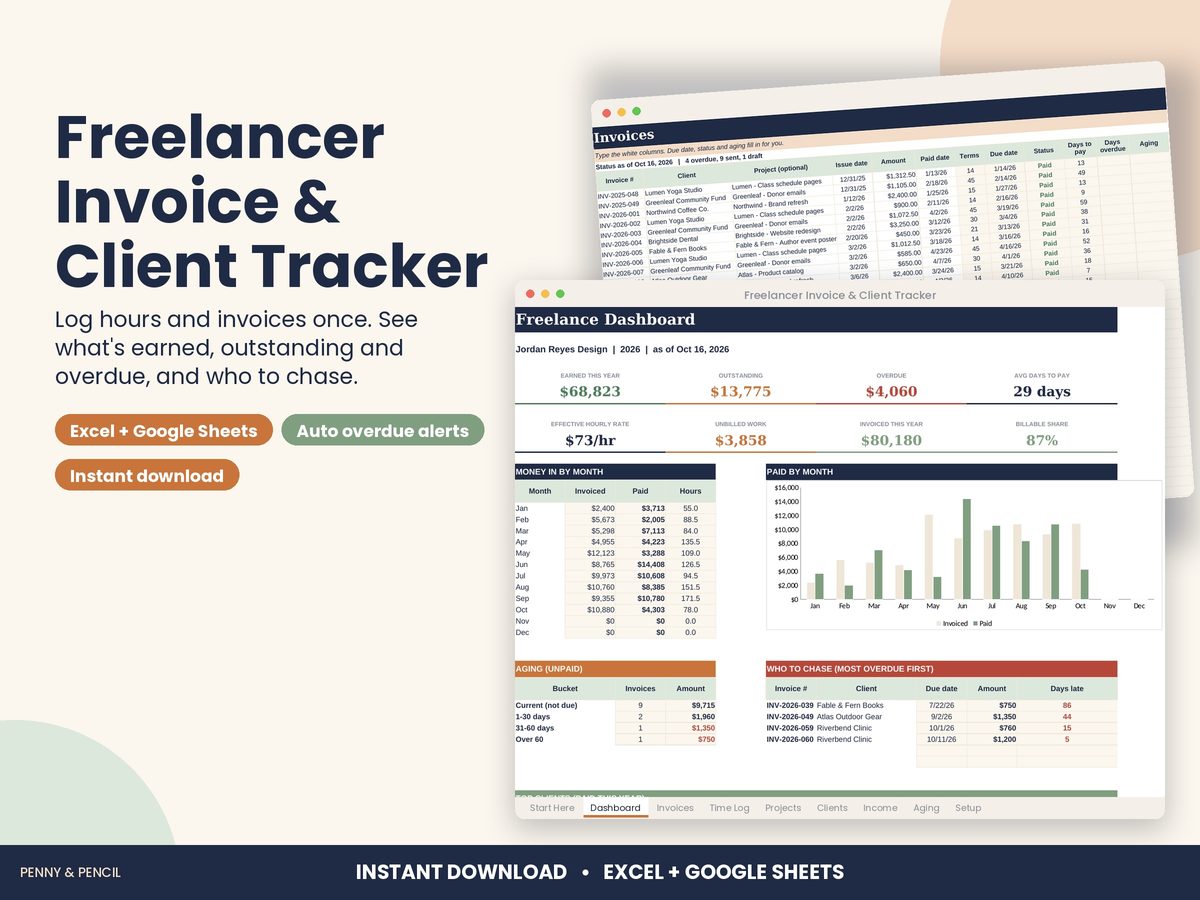
How to Track Unpaid Invoices: Due Dates, Receipts and a Follow-Up Record
Track unpaid invoices with one invoice ID, issued and due dates, original amount, verified receipts, remaining balance and a dated next action. Reconcile part-payments before preparing a reminder. In this fictional record, a 600-dollar invoice with 250 received has 350 remaining; a reminder draft is not evidence of payment.
Keep the original invoice reference, client code, issue date and agreed due date. A draft invoice stays separate until issued. This page tracks receivables; use the invoice creation guide for the earlier step.
Match receipts before subtracting
Record each payment once with its date and receipt reference. For invoice INV-A, 600 minus a checked 250 receipt gives 350 outstanding. If an entry is ambiguous, mark it unmatched until verified instead of subtracting it from multiple invoices.
Prepare the next action from checked facts
At the fictional November 22 review, INV-A was due November 20 and still has 350 outstanding. Record “prepare balance check for client A” with an owner and next review date. The record does not send a reminder or establish collection rights.
Keep corrections and status changes traceable
If a confirmed correction changes the amount due, retain its reference and show the adjustment separately from receipts. Close a row only after the adjusted balance reconciles to zero. These are general recordkeeping examples, not accounting, tax or legal advice.
Worked numbers, tables and teaching examples are original illustrations, not customer records.
The free download opens when you join our list: join below.
Free downloads unlock when you join our list
Join the Penny & Pencil list once, confirm the email we send, and every free download, printable and planner on this site opens. We send a welcome note, deals, and one email every two weeks. Unsubscribe any time.
You are in. Your free downloads are unlocked on this page.