Start with the dated bank movements
Fictional example: a household buys home supplies from checking on November 24. A partial refund reaches that same account on November 28. Both entries refer to purchase P1; the refund does not erase the original payment.
Fictional checking account: received movements only| Date | Record | Bank change |
|---|
| Nov 24 | Home supplies purchase · P1 | −$120 |
|---|
| Nov 28 | Partial refund for P1 · received | +$30 |
|---|
With an opening bank balance of $600 and no other movements, the account falls to $480 after the purchase and rises to $510 when the refund arrives. Check each dated amount against the account record.
Then bridge the refund to category spending
For this separate manual budget record, purchases increase spending and received purchase refunds reduce spending in the original category. The bank-change sign and the spending-change sign describe different things.
Home supplies: same-month spending bridge| Record | Spending change |
|---|
| Original purchase P1 | $120 |
|---|
| Received refund linked to P1 | −$30 |
|---|
| Net category spending | $90 |
|---|
The $30 coming back is linked to an earlier purchase, so this example adds nothing to new-income totals. Keep the merchant, purchase reference and category beside the refund so it can be traced.
Keep expected refunds out of received totals
A return request or a merchant’s promised refund is not a received bank movement. Keep its expected amount, request date and status in a separate pending note. Leave that amount out of the bank balance and spending reduction until receipt is confirmed.
If only part arrives, record only that received part. Keep any unresolved remainder pending; do not enter the whole expected refund and then also count its individual receipts.
What if the refund arrives next month?
Alternative example, replacing the November 28 receipt: the same refund arrives on December 3. In this date-of-receipt illustration, keep the original purchase in November and the linked spending reduction in December.
Alternative timing: refund received December 3| Period | Category spending |
|---|
| November: purchase only | $120 |
|---|
| December: refund only | −$30 |
|---|
| Both months combined | $90 |
|---|
The negative December figure means this example category has more received refunds than new purchases that month. It is not a new pay receipt. Do not also reduce November’s entry: that would subtract one refund twice.
This is one consistent household recordkeeping method, not a universal accounting rule. Keep a note connecting the two months so the combined result remains understandable.
Check the purchase and refund once
- Match the original payment to its date, amount and spending category.
- Confirm the refund actually arrived, including its destination account and received date.
- Link the received refund to the purchase reference; use the matching category for this spending bridge.
- Reconcile bank movements separately from the category calculation. If the refund lands in another account, show it there and count its category reduction only once.
- Check the total refunded so far against the original purchase. Investigate any unexplained excess instead of silently treating it as income.
For combining account records without counting transfers twice, see the multiple-account budget example.
Keep the example beside your planner
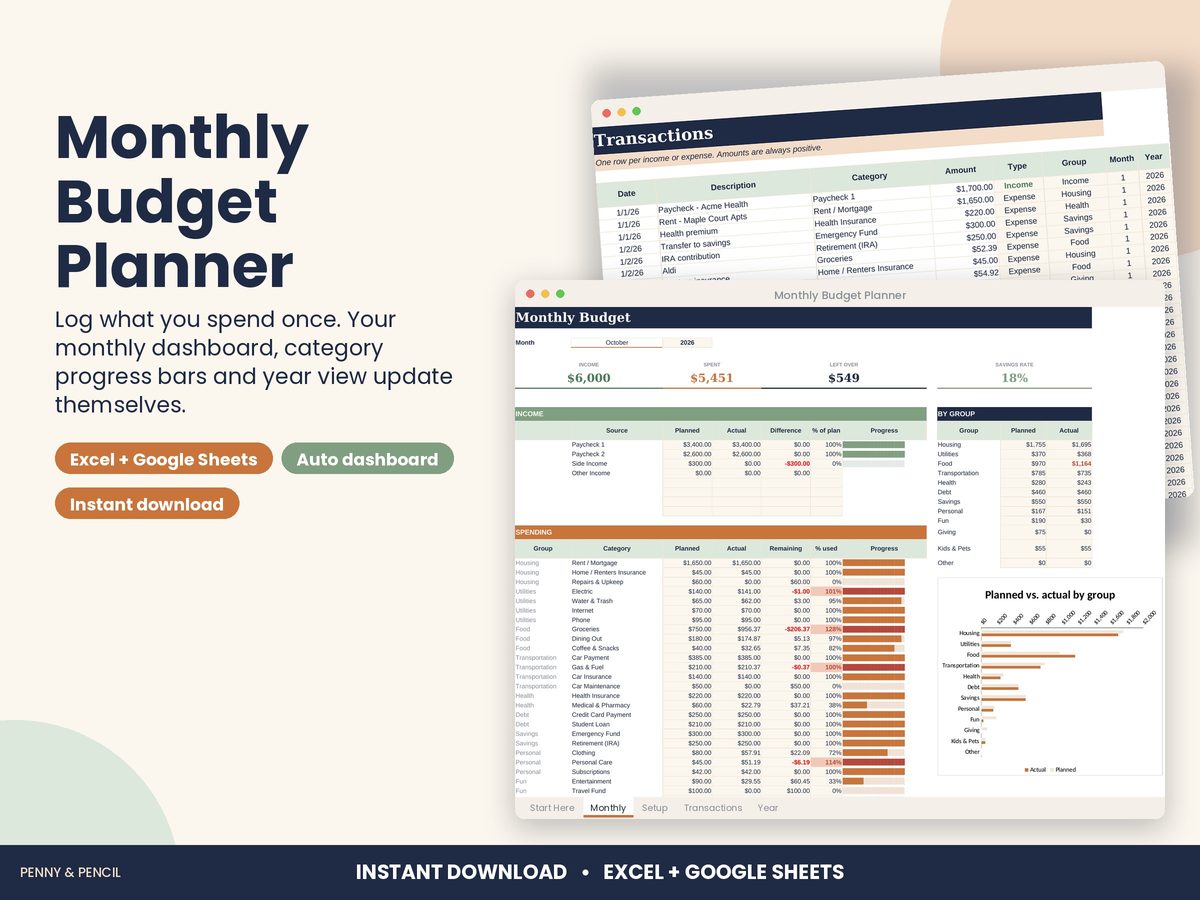
The Monthly Budget Planner offers transaction and category records. Use the dated movements and spending bridge here as a separate manual reference; these are not instructions for entering a refund into the sold workbook.
The email-list download above is the existing one-page monthly budget sample, with planned, actual and difference columns. It is not a refund calculator or an editable refund workbook.
Sources — read November 19, 2026
All dates, amounts and calculations are original fictional organizing examples, not financial, tax or legal advice.